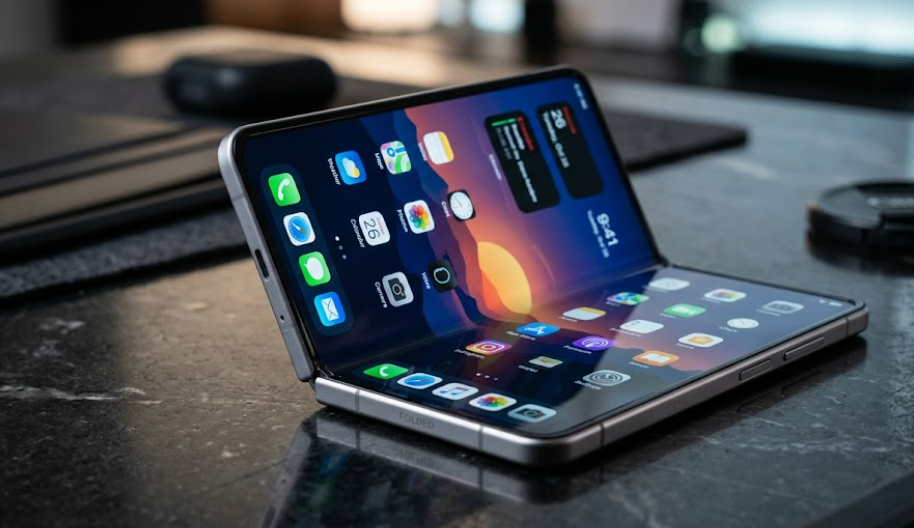
For years, using a book-style folding phone with the cover display closed felt like holding a television remote control. The tall, narrow aspect ratio made typing two-handed uncomfortable, crammed text into constrained columns, and forced users to unfold the phone just to respond to a simple text message. In late 2026, the mobile industry has finally reached a consensus to abandon those awkward tall dimensions.
Recent flagship releases mark a dramatic structural shift toward wide, passport-style designs. Instead of towering vertically, the newest generation of foldables prioritizes horizontal screen real estate when closed. This shift instantly makes the front panel feel like a standard premium smartphone rather than an awkward compromise. Users can comfortably type with full thumb freedom, view full web pages without extreme zoom levels, and run split-screen apps without cramping.
By making the cover screen genuinely practical on its own, manufacturers have fundamentally changed how people interact with foldable hardware. Opening the device is no longer a requirement for every task; it is now reserved for immersive media, heavy multitasking, or reading large documents.
How Silicon-Carbon Batteries Solved the Foldable Power Crisis
While aspect ratios fix ergonomics, battery life has historically been the Achilles' heel of dual-screen smartphones. Driving two high-refresh-rate displays and a high-performance processor demands massive energy, yet keeping the chassis thin meant cramming split lithium-ion batteries into tiny internal cavities. That conflict often left power users tethered to a charger before the evening arrived.
The breakthrough changing this balance in late 2026 is the rapid mass adoption of Silicon-Carbon (Si/C) battery chemistry. By swapping standard graphite anodes for silicon-carbon composite materials, phone makers are achieving significantly higher energy density within the exact same physical footprint.
This material swap allows manufacturers to increase total battery capacity by 20% to 30% without adding thickness or weight. Slim foldables that previously capped out around 4,400 mAh can now comfortably house capacities reaching 5,000 mAh or higher while keeping thin profiles under 5 millimeters when unfolded. Combined with more power-efficient 3nm chipsets and intelligent display refresh rates, the modern foldable finally delivers full two-day battery life without bulk.
On-Device AI Tracking and the Real World Camera Advantage
For years, foldable camera performance lagged behind traditional slab flagships due to physical space constraints. Thinner chassis hulls simply couldn't fit massive optical sensors or heavy periscope zoom assemblies without creating huge camera bumps. Rather than trying to cram massive glass hardware into paper-thin frames, the latest devices rely on dedicated, on-device AI camera engines.
Instead of relying solely on raw sensor size, new mobile chips process image frames in real time through dedicated neural processing pipelines. Features like automated AI subject tracking allow the phone to follow moving subjects across both inner and outer displays seamlessly. For content creators, this turns the foldable form factor into a self-contained production studio—the phone can sit propped up on a flat surface while the software automatically reframes, crops, and stabilizes footage dynamically.
This convergence of wider cover displays, high-density silicon-carbon batteries, and camera-centric AI features has shifted foldables from experimental niche hardware into everyday daily drivers. The early days of compromising durability, battery life, and usability for a folding screen are officially over.